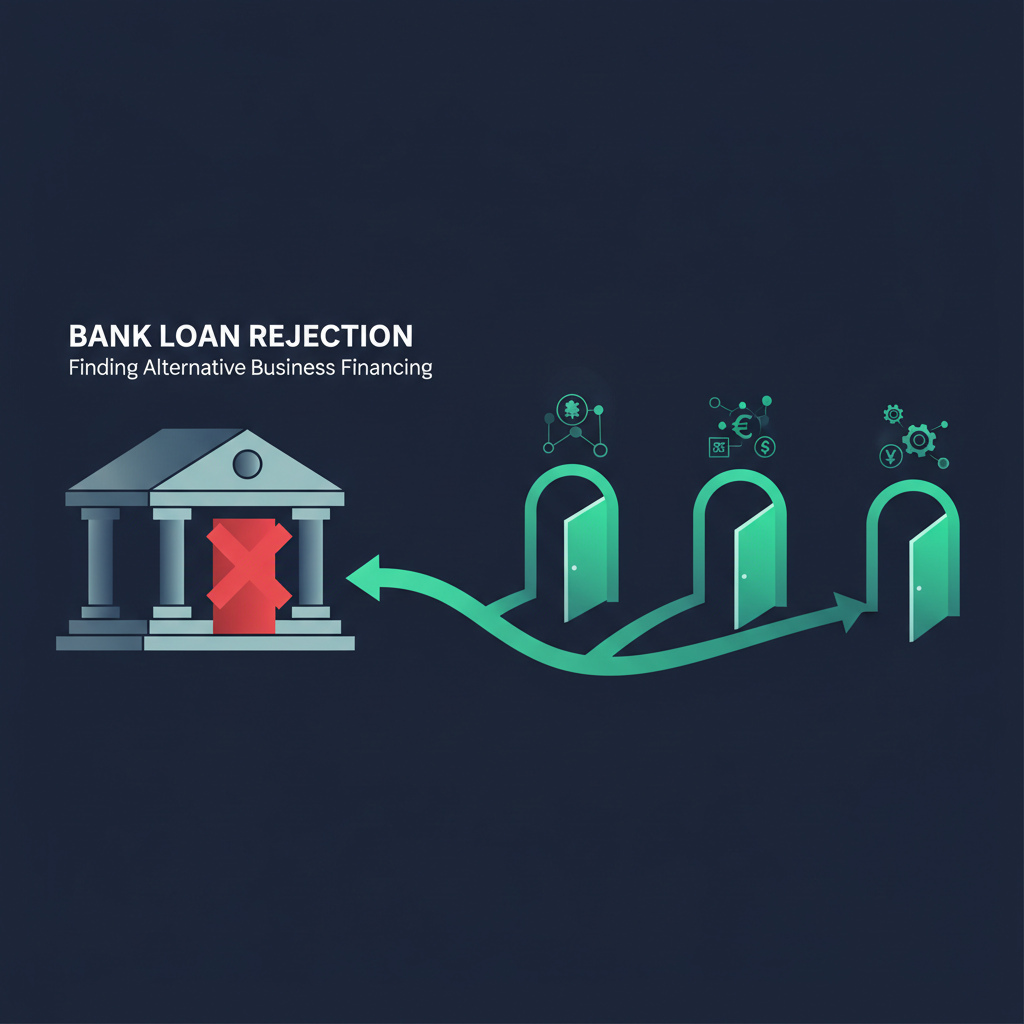
You've been banking there for years. You have a solid business. You asked for a reasonable amount. And they still said no.
Here's the thing most banks won't tell you: their "no" is about their risk model, not your business. And their risk model was built for a very specific type of borrower — one that most small businesses simply aren't.
Most banks want 2–3 years of financial history minimum. If you're under that threshold, you're outside their underwriting box regardless of how strong your revenue is. It's not personal — it's a policy.
Banks look at tax returns, not bank statements. If you've been writing off aggressively (which is smart from a tax perspective), your taxable income looks low — and banks lend based on what the IRS sees. You can be genuinely profitable and still get declined.
Restaurants, trucking, construction, staffing, cannabis, auto repair — banks have internal lists of industries they limit exposure to. Your business can be completely legitimate and still get flagged based on NAICS code alone.
Banks typically want 680+ personal credit. Not 679. Not 675. 680 or above. They don't have flexibility on this — it's policy driven by their regulators.
Especially for larger loans, banks want hard collateral — real estate, equipment, assets they can seize. If your business is primarily people and service, you may not have what they're looking for.
💡 The uncomfortable truth: Banks approve roughly 13–15% of small business loan applications. That's not a failure rate — it's a design feature. They're not trying to serve most small businesses. They never were.
Step 1: Don't apply everywhere. Multiple hard inquiries in a short window can hurt the credit score you need to get funded. Be strategic.
Step 2: Understand your actual profile. Know your credit score, your monthly revenue, your time in business, and your outstanding debt load. These four numbers determine where you fit in the lending landscape.
Step 3: Match the lender to your profile. Alternative lenders, revenue-based funders, equipment finance companies, SBA microlenders — each has a different sweet spot. A 580-score restaurant owner with $70K/month in revenue belongs in a very different conversation than a 700-score landscaper with $20K/month.
Step 4: Present your file correctly. How you package your application matters. Three months of clean bank statements, a clear use of funds, and an organized file closes more deals than a vague ask with missing documents.
There are over 200 non-bank lenders actively funding small businesses right now. MCAs, revenue-based financing, SBA alternatives, equipment lenders, invoice factoring, business lines of credit — the market has evolved significantly in the last decade.
The challenge isn't whether funding exists. The challenge is knowing which product is right for your situation and which lender has the best terms for your profile.
That's what Caply does. We take one application and run it across 50+ lenders simultaneously — so you get matched to the right product fast, without damaging your credit score in the process.
Find out exactly what you qualify for — takes 3 minutes.
Apply Now →Andrew Dillard is the founder & CEO of Caply Smart Business Funding — a lending marketplace connecting small businesses with 50+ lenders across the country. We work with entrepreneurs, restaurants, contractors, healthcare providers, trucking companies, dental offices, landscapers, retailers, and startups.
Caply Smart Funding works with 50+ lending partners to connect small business owners and founders with the right capital at the right time — including those who need to build toward fundability first.
Apply at caplylending.com